
30 Architectural Facts you DID NOT KNOW

Updated: Jan 3
Author: Pablo Vazquez.
Lover of discovering new places and addicted to work, in short, an architect

Architecture is everywhere, but we don't always look at it closely. Beyond plans, materials, and styles, every building holds unexpected stories, mistakes that have become icons, political decisions, technical accidents, and symbolic gestures that have shaped cities and entire generations.
In this collection, we've gathered 30 fascinating facts about architecture that span centuries, continents, and disciplines: from ancient wonders and contemporary buildings to film, social activism, and popular culture. This journey demonstrates that architecture isn't just built with concrete and steel, but also with memory, imagination, and meaning.
Prepare to rediscover places you thought you knew… and be surprised by all they hide…
30 Architectural Facts You Didn't Know
The Eiffel Tower in Winter: A Change of Season and Height.
A Meeting of Beauty: Palace of Fine Arts and Torre Latinoamericana.
Zaha Hadid and the Fusion of Architecture and Artificial Intelligence.
Light and Spirituality in Barragán's Capuchin Convent.
The Narrowest Building in the World is in Poland.
Burj Khalifa: Defying Height and Engineering.
The Floating Book Library: Architectural Magic on Vasconcelos Avenue.
The Magical Sound of the Temple of Kukulkan in Chichen Itza.
THE LINE: The Vertical City That Will Redefine the Urban Experience.
The Bean in Chicago Is Not a Single Piece.
Stonewall Bar: Where Architecture and Activism Met.
Airbnb + Shrek.
The Cost of the Battle of New York in The Avengers.
Original Use for the Monument to the Revolution.
The Dog Sculpture at the Palace of Fine Arts.
The building that “breathes”: the Eastgate Centre in Zimbabwe.
How long did the Great Wall of China take to build?
Architecture was an Olympic sport until the mid-20th century
The Sagrada Familia remains unfinished after 130 years.
The most famous mistake in the world: the Leaning Tower of Pisa.
The most famous train station in the world was built by a Spaniard.
The first building in Mexico after the Conquest.
The tallest building in Mexico and the second tallest in Latin America.
The tallest building in Latin America… unfinished?
The Mies van der Rohe building in Mexico.
Why did Barragán use so much pink?
A monument to love: the Taj Mahal.
The capacity of the Roman Colosseum.
The house that was moved to build Torre Reforma.
The ORIGINAL color of Las Torres Satelite.
1. The Eiffel Tower in Winter: A Change of Season and Height

The iconic Eiffel Tower holds a seasonal secret: in winter, its height decreases due to the contraction of the metal in the cold. In contrast, in summer, when the metal expands, the tower rises 15 cm taller. A remarkable testament to the interplay between climate and structure.
2. Beauty Encounter: Palace of Fine Arts and Latin American Tower

Mexico City boasts a striking architectural juxtaposition: the majestic Palace of Fine Arts and the imposing Torre Latinoamericana. Though different in style and function, they share neoclassical facades that enrich the city's skyline. A mere coincidence or artistic design?
3. Zaha Hadid and the Fusion of Architecture and Artificial Intelligence

Renowned architect Zaha Hadid has incorporated MIDJOURNEY's AI technology into her creative process for years. This innovative technology has enabled her to preview and develop cutting-edge designs and unique organic forms, seamlessly blending architecture with technological innovation.
4. Light and Spirituality in the Capuchin Convent of Barragán

In the Capuchin convent, designed by Luis Barragán, the architecture comes alive through the interplay of light projected by a cross in its openings. This architectural element not only creates a mystical atmosphere but also a captivating aesthetic experience, masterfully merging light and spirituality.
5. The narrowest building in the world is in Poland

Can you imagine living in a house that's only 2 meters wide? The YUUA design studio took on this challenge and transformed it into a cozy and functional living space. With abundant natural light, a clever layout, and visual tricks, they proved that even in the smallest of spaces, creativity can flourish.
Inserted between two existing buildings, this microarchitecture questions the limits of habitable space and demonstrates how architectural creativity can emerge even in the cracks of the contemporary city.
6. Burj Khalifa: Defying Height and Engineering

The majestic Burj Khalifa in Dubai holds the title of the world's tallest building, reaching over 828 meters. Beyond its imposing height, it offers luxurious residential spaces, renowned hotels, and panoramic views that defy the limits of engineering and design.
7. The Library of Floating Books: Architectural Magic in Vasconcelos

The José Vasconcelos Library in Mexico City captivates with its innovative architecture that creates the illusion of books floating in the air. This stunning vision is complemented by spacious, light-filled areas that invite visitors to immerse themselves in reading and knowledge, merging architectural beauty with a love of books.
8. The Magical Sound of the Kukulkan Temple in Chichen Itza

Clapping in front of the Temple of Kukulkan at Chichen Itza reveals an acoustic secret: the echo mimics the sound of the beautiful Quetzal, the sacred bird of the Maya. This connection between the temple's structure and Mayan culture creates a unique experience that transcends time and space.
9. THE LINE: The Vertical City That Will Redefine the Urban Experience

A bold project is underway: THE LINE, a vertical city in the middle of the desert. With ample green spaces, sustainable transportation, and cutting-edge technology, it promises to transform our relationship with the urban environment and challenge architectural conventions.
10. The Bean in Chicago is not a single piece

Although its surface appears continuous and perfect, Cloud Gate—better known as The Bean —is composed of 168 stainless steel plates welded together with extreme precision. The challenge was not only structural but also aesthetic: the seams had to disappear completely to create a seamless, mirror-like effect. This level of detail made the sculpture a landmark of both art and engineering.
11. Stonewall Bar: Where architecture and activism met

The Stonewall Inn, a bar in New York City, went from being an ordinary building to a global historical symbol . In 1969, a police raid sparked a series of spontaneous protests that marked the beginning of the modern LGBT+ rights movement. Today, its architectural value lies not in its form, but in its social and cultural significance , demonstrating that spaces can also be catalysts for change.
12. Airbnb + Shrek

Airbnb has taken ephemeral and themed architecture to another level, allowing stays in spaces inspired by pop culture, such as Shrek's house . Beyond the anecdotal, these projects show how architecture can be narrative, immersive, and experiential, blurring the line between fiction and living space, and redefining the way we consume design.
13. Cost of the Battle of New York in The Avengers

The iconic final battle of The Avengers destroys a fictional version of New York, but architects and engineers have calculated the hypothetical cost of the damage: more than $160 billion . This exercise reveals how urban architecture is key even in film, functioning as setting, victim, and protagonist of the visual narrative.
14. Original use for the Monument to the Revolution

The Legislative Palace was one of Porfirio Díaz's flagship projects to celebrate the centennial of Mexico's Independence. Designed by the French architect Émelie Bénard, the grand project envisioned a complex similar to the U.S. Capitol and was intended to house the Chamber of Deputies and the Senate; however, the outbreak of the Revolution left the work unfinished.
15. The Dog Sculpture in Fine Arts

Few notice it, but a sculpture of a dog is hidden on the facade of the Palace of Fine Arts in Mexico City . This detail is part of the building's symbolic language and reflects the attention to ornamentation characteristic of the era. It serves as a reminder that many historic buildings hold secrets visible only to those who observe carefully.
16. The building that “breathes”: the Eastgate Centre in Zimbabwe

The Eastgate Centre in Harare is one of the most fascinating examples of bioclimatic architecture. Inspired by African termite mounds, the building regulates its temperature naturally through a passive ventilation system, drastically reducing the need for air conditioning. This design not only decreases energy consumption but also demonstrates how observing nature can offer architectural solutions that are more efficient than conventional technology.
17. How long did it take to build the Great Wall of China?

The Great Wall of China wasn't built all at once, but over more than 2,000 years , spanning several dynasties. Its length, construction techniques, and adaptation to the terrain make it one of the most complex architectural feats in history. More than just a wall, it's a monumental territorial system.
18. Architecture was an Olympic sport until the mid-20th century

Between 1912 and 1948, architecture was an integral part of the Olympic Games , alongside disciplines such as painting, music, and sculpture. Projects were evaluated based on both their artistic and functional merit. This historical fact serves as a reminder that architecture was officially recognized as an art form, not merely a technical discipline.
19. The Sagrada Familia remains unfinished after 130 years
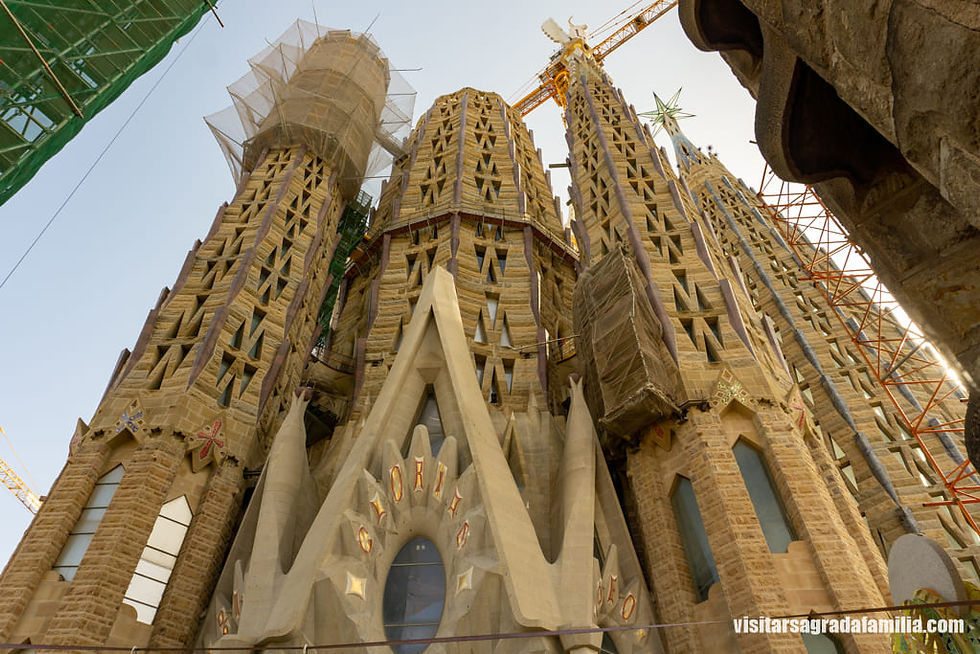
Begun in 1882, Antoni Gaudí's Sagrada Familia remains under construction. Wars, lack of resources, and the complexity of the design have delayed its completion. Today, digital technology and new construction methods are working to finish it, demonstrating how a work can transcend generations and become a collective project over time.
20. The Most Famous Mistake in the World: The Leaning Tower of Pisa

The Leaning Tower of Pisa's tilt was not intentional, but rather the result of a flaw in its foundation on unstable ground. What could have been an architectural failure became its greatest attraction. This case demonstrates how mistakes can sometimes redefine the symbolic value of a work.
21. The most famous train station in the world was built by a Spaniard.

New York's Grand Central Terminal owes much of its structural beauty to Rafael Guastavino , the Spanish architect who introduced the French vault to the United States. His self-supporting roofs are not only aesthetically pleasing but also strong and acoustically efficient, leaving a profound mark on American architecture.
22. The First Building in Mexico after the Conquest:

After the Conquest, the first building as we know it today was the Viceroy's Palace, now known as the National Palace . Built in 1522 on the ruins of Moctezuma's palace just a year after the fall of Mexico-Tenochtitlán, it originally served as Hernán Cortés's residence . It was almost destroyed after a riot in 1692 and today is an icon of the capital, housing cultural and historical treasures such as Diego Rivera's murals.
23. The tallest building in Mexico and the second tallest in Latin America

With a projected height of over 475 meters, Torre Rise in Monterrey is poised to become the tallest building in Mexico and one of the tallest in Latin America. Its vertical ambition reflects the country's urban and economic growth, as well as the symbolic competition among the region's major cities.
24. The tallest building in Latin America… unfinished?

The Trump Tower in Balneário Camboriú, Brazil, was announced as the tallest in Latin America. However, legal and financial irregularities have cast doubt on its completion. This case illustrates how large-scale architecture faces not only technical challenges, but also political and economic ones.
25. The Mies Van Der Rohe Building in Mexico

The German architect and designer who helped establish the foundations of modern architecture designed a building for the Bacardi offices in Tultitlán, State of Mexico, east of the Mexico City metropolitan area. The open-plan building, with its rigid structure and glass walls that allow visibility between the interior and exterior, is a hidden gem of Mexican architecture.
26. Why did Barragán use the color PINK so much?

For Luis Barragán, pink was not decoration, but emotion and spirituality . Inspired by Mexican vernacular architecture and the light of the landscape, this color became a tool for creating introspective atmospheres. In his work, color is as structural as the wall that supports it.
27. A Monument to Love: The Taj Mahal

The Taj Mahal in India, famous for its exquisite beauty, was built by the Mughal emperor Shah Jahan as a mausoleum for his beloved wife Mumtaz Mahal.
28. The Capacity of the Roman Colosseum

The Colosseum in Rome, completed in 80 AD, could hold up to 80,000 spectators and was used for gladiatorial combats and public spectacles.
29. The house that was moved to build Torre Reforma

During the construction of Torre Reforma in Mexico City, a historic mansion was moved several meters to preserve it. This technical and symbolic gesture demonstrated that contemporary verticality can engage with urban memory, rather than erase it.
30. The ORIGINAL color of the Satellite Towers

Contrary to popular belief, the Satellite Towers were not originally designed in primary colors. Pani and Barragán envisioned ochre and brown tones , closer to the surrounding landscape. The current colors were applied later, transforming their urban appearance and turning them into a visual icon of modern Mexico.


Comments